OFFER: A BRAND NEW SERIES AND 5 FREEBIES FOR YOU!
Grab my new series, "Noble Gentlemen of the Ton", and get 5 FREE novels as a gift! Have a look here!
Chapter One
Lady Annabelle Rockwood sat on a bench at the edge of the market, her sketchbook balanced on her knees, watching as the local farmers, artisans, and gentry walked through the various stalls, buying beautifully-made wares and chatting happily to one another. It was a glorious day.
The sun was shining, and the air was crisp and fresh. Red and orange leaves were beginning to fall throughout the Scottish Highland village, giving the paths and walkways the same look as the purple heather that was already abundant in the hills behind them.
It was Annie’s favorite time of year, and the best time to try and capture the quaint, rustic charm of Culcross Village with her pencils. That afternoon, Annie was particularly interested in the craftsmen who were hawking their wares.
There were old men selling tartan kilts, their competitors who dealt in tweed for waistcoat, shawls, and even some winter dresses, a man selling pewter pots, and of course, Mrs. O’Neill, who sold clay dishware, and whose three children were running around her as she hawked her wares.
Annie was fond of Mrs. O’Neill. Many times, she had sat in the stall with her, listening as Mrs. O’Neill told her how hard it was to be a craftswoman, since she was not allowed into any of the guilds that might help her improve her wages and skills.
“They consider a woman’s inclusion in a guild to bring down the quality of the organization,” she had told Annie a few weeks ago. “Remember that, milady. It is never easy to be a woman in a man’s field, whether we are commoners or aristocrats.”
Those were words that Annie took to heart. Ever since she had inherited her uncle’s old castle and moved up to Scotland, she’d had her heart set on pursuing her passion for drawing. She had even sent off several botanical drawings to a few prestigious publications in the last few months. That morning, she had received a response from one of the publications, but she had not yet opened it.
She was too afraid of what they might say. It was not often that women were accepted into prestigious publications. Since talking to Mrs. O’Neill, she had submitted another drawing to a different publication under the name A. Rockwell; a name she knew the publishers would assume belonged to a man.
Annie sighed as she looked back at her sketch. This one was of the man sitting at the edge of one of the stalls, whittling a musical pipe. She had been watching him for half an hour, and the way he worked with wood fascinated her. She was trying to capture the intensity of his gaze as he worked on his creation.
It was moments such as those—when a craftsman or an artist was lost in his work—that interested her the most. It reminded her of why she loved sketching and painting. They allowed her to be completely absorbed and forget about all the distractions around her.
And there were many distractions in her life. Perhaps most pressingly, her mother.
Mrs. O’Neill caught sight of her and waved. “Lady Annabelle!” she called out. “How do you do this afternoon?”
Smiling shyly, Annie closed her sketchbook, stood up, smoothed down her skirts, and walked over to the stall where Mrs. O’Neill stood wiping her hands on her apron.
“Timothy, darling, do not shout like that,” she scolded her oldest boy as Annie approached. “And say hello to Lady Annabelle. Do you remember her? She did those sketches of me a few weeks ago?”
“How do you do, milady?” the boy asked, his eyes wide as he bowed low.
Annie smiled down at him. “I am very well, thank you,” she said. “You are quite the little gentleman.”
The boy giggled, then hid his head in his mother’s skirts. Mrs. O’Neill laughed and shook her head. “He is usually not so shy. Most of the time, I cannot get him to stop talking. But ever since I told him ye live in the castle yonder, he has been uncharacteristically shy.”
“He is wonderful,” Annie assured her. “I would have been shy around a great lord who lived in a castle myself when I was his age. I still would be, come to think of it.”
Mrs. O’Neill laughed again. She was a pretty, round-faced woman who seemed to rule over the market and always knew the local gossip. It was hard to imagine that she had ever felt shy a day in her life.
“Were you sketching again today?” Mrs. O’Neill asked her, and Annie nodded. She pulled her sketchbook back out of her reticule and showed her the sketch she’d been working on.
“Is that Mr. Macdonald making his flute?” Mrs. O’Neill’s eyes widened in wonder. “You have rendered him so wonderfully! I feel as if he is going to come alive on the page.”
Annie blushed, suddenly self-conscious. “It is not so good,” she said quickly. “Just a quick sketch.”
“It is very good,” Mrs. O’Neill insisted. “You really do have a talent, milady.”
“That is very kind of you to say…” Annie trailed off, biting her lip. She wished her own mother would say something of the kind. But Lady Rockwood had always dismissed Annie’s attempts at drawing and sketching. She was concerned only with Annie finding a husband.
As if she could read her mind, Mrs. O’Neill peered at her more closely, her face softening.
“We heard that Lady Rockwood was visiting the castle,” she began tentatively.
“Yes,” Annie said. “My mother was visiting. She only just left this morning.”
“And did you have a pleasant visit?”
“It was…” Annie’s words failed her. Her mind leapt back to yesterday afternoon, when she, her mother, and her great-aunt Julia had sat in the drawing room; her mother loudly talking about all the eligible men of the previous Season that Annie had lost on out meeting because she had been “hiding away in Scotland for the last six months.”
“Really,” Lady Rockwood had said, her eyes narrowing as they met Annie’s. “How do you expect to meet a husband when you are all the way up here, so far from civilization and all eligible young men?”
“She does not need to find a husband,” Great-Aunt Julia had said, rapping her cane hard onto the floor. “She is the owner of Stewart Castle. If she marries, then her husband will become the steward of this castle and its lands, and she will no longer be in charge of her own fate.”
“In charge of her own fate?” Lady Rockwood had repeated, her eyes flashing with anger. “What kind of young lady wants to be in charge of her own fate? Especially one who is as socially incompetent and inept at Societal graces as Annabelle is?”
“She is not inept—” Great-Aunt Julia had begun, but Lady Rockwood had cut her off.
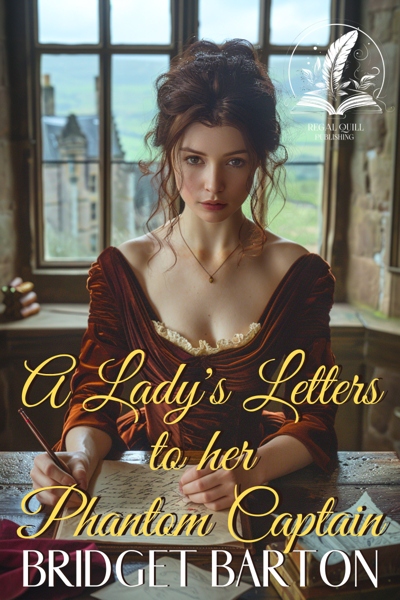
“She has always avoided balls and parties as if they were the plague. Shutting herself away to write her letters to that… that Captain!”
“He has a name,” Annie had said then, her voice shaking. “Captain Campbell.”
“Yes,” her mother said, sniffing. “The low-born Scottish Captain of the Royal Army. Well, I suppose you shall not be marrying him now, so I need not worry about it any longer.”
“Mama!” Annie’s eyes had filled with tears—something she had trained herself how to do after she’d announced the death of her fiancé. “How could you say such a terrible thing? I am in mourning!”
“You have been in mourning for six months now!” her mother snapped. “That is too long for a fiancé that you never saw and who most likely was never going to make good on his promise to marry you.”
“He was,” Annie said, looking back down at her hands. “I know he was. He loved me very dearly, and I have the letters to prove it.”
Ahh yes. She had those letters. Letters that she dearly hoped her mother would never read. Because if she did, she might notice that the hand was remarkably similar to Annie’s own. Something she had tried hard to disguise at first but which she had become lazier about in the years since her deception began.
Lady Rockwood, of course, had not demanded to see the letters. She had always regarded her daughter’s bizarre engagement to a Scottish captain she had met only a few times to be something of an embarrassment, and she had come far too close, in the last six months, to admitting she was relieved that the man had died in battle.
Not, of course, that he had actually died.
Because of course Captain C. Campbell was not real.
“Lady Annabelle is also in mourning for her dear uncle,” Great-Aunt Julia had pointed out, to cover the awkwardness of the moment. “My own dear nephew.”
“Well, I think it is high time she came out of her mourning weeds,” Lady Rockwood had said, taking a prim sip of tea. “Gray and black will never find you a husband, Annabelle. And I, for one, do not believe that you intend to live up all your days here alone, in the Highlands of Scotland, without a husband to care for you and children to call your own. You will go mad with all this silence and emptiness.”
Annie had simply pressed her lips together and smiled weakly. There was no way to explain to her mother that this was where she was happiest—far away from Society, in the Highlands of Scotland, surrounded by nothing but silence and emptiness. It gave her all the time in the world to draw and sketch, to improve her craft, and to go for long walks in the hills.
It was also the perfect place to escape the pressures of Society. There were no balls here. No gossiping debutantes. No gentlemen she was forced to try and please despite how ill-mannered or presumptuous they might be.
There in the highlands, she was free.
Not to mention that her secret deception was less likely to be found out.
“It can be hard with mothers,” Mrs. O’Neill said after a long moment, and Annie blinked and looked up at her. She had been so lost in her thoughts that she had almost forgotten she was still talking with the potter. “They often want something else for us than we want for ourselves.”
“She wants me to marry,” Annie admitted. “And she is right, of course. It is my duty to marry. But…”
“But you are still in love with the Scottish captain with whom you corresponded by letter for all those years?” Mrs. O’Neill asked, her eyes lighting up at once. In a moment of weakness, Annie had told Mrs. O’Neill about Captain Campbell. A fellow highlander, Mrs. O’Neill had loved the story—and had been deeply saddened to hear about his death.
“Well, he is gone,” Annie said, looking away, her blonde curls falling in front of her eyes as she did so. She brushed them aside impatiently. “I can never have him.”
Mrs. O’Neill patted her arm. “You will love again, my dear. I know it seems impossible now, but such things do happen. And you are very young and pretty still. Those blue eyes are so vibrant, like looking into the sea—any man would fall head over heels in love with them! And you are so slender and dainty.”
Annie smiled, but she felt uncomfortable now, as she always did when someone complimented her.
“I should really be getting back to the castle,” she said. “My great-aunt will be expecting me for tea.”
“Well, we appreciate you stopping by,” Mrs. O’Neill said. “Children, say goodbye to Lady Annabelle!”
As Annie walked back down the lane, toward the village that would take her to Stewart Castle, she felt a twinge of guilt.
She should not have told Mrs. O’Neill about Captain Campbell. She had sworn to herself that she would retire that deception. But she was so used to the lie by now that it was sometimes hard to remember. And she missed talking about him.
Captain C. Campbell, of the 42nd Highland Regiment, was a suitor that Annie had invented during her first Season.
She had first gotten the idea to invent an admirer after a particularly miserable ball, during which her mother had scolded her for dancing with so few gentlemen. She had then glimpsed the name in the casualty lists from old newspapers. Seeing as how her uncle owned a castle in the Highlands, the idea of a Highlander fiancé had gripped her young, girlish imagination.
And so she had begun to spin a web of lies about her whirlwind romance with the captain: how she had met him at a ball; how they had talked for hours by moonlight while her maid—who was sworn to secrecy—chaperoned; and how they had only been able to meet a few times before he had to return to France with the 42nd Regiment.
Once the Captain returned to France, their romance had continued through letters. Annie would write letters to Captain C Campbell and send them off to France—the expense be damned! These letters were more like diary entries of her life than anything. In them, she had chronicled her loneliness, her inability to talk to gentlemen, her shyness in crowds, and her misery living in London when all she craved was the peace and solitude of the countryside.
In response, she had written herself replies, so that her family could witness her opening them. These responses were full of all the loving and accepting things that she had always dreamed a gentleman might say to her.
At first, the letters had been filled with romantic nonsense, but as time went on, she had written herself more sophisticated replies, focusing on criticism of the drawings she had sent her fake suitor and advice she wished someone would give to her on how to fit in with Society.
Eventually, she had even proposed to herself by letter, which she had readily and gushingly accepted in her next letter.
Needless to say, the whole debacle had gotten somewhat… out of hand.
Which was why, six months ago, after four years of fake correspondence, she had decided to kill off Captain Campbell. She knew she could not keep her deception going forever, and things were becoming ludicrous.
The war was ending anyway, and people would soon be expecting Captain Campbell to show up and marry her. Anyway, she could not keep living in her delusions. She had to grow up and live in real life.
So she had killed off the captain and gone into mourning.
The timing was not entirely random. A few weeks earlier, her uncle had died, bequeathing her his unentailed castle in the Scottish Highlands. It had been exactly what she needed: a home of her own, with a suitable income that would allow her to pursue her artistic dreams and not require her to marry.
A place far from Society, where she could live out a quiet, comfortable life, and no one would ever be the wiser about the great shame of her fake fiancé.
But as Annie walked back through the village, there was a niggling doubt in the back of her mind. Yes, she had moved up to Stewart Castle with her Great-Aunt and her dear friend, Miss Eliza Harrow. She had successfully built the quiet, comfortable life she wanted. She was drawing and sketching every day.
And yet, she was still lonely. Ever since the fake letters from Captain Campbell had ceased to arrive, she had felt the loneliness like a chasm inside of her. The thought filled her with shame. She did not even miss a real man who had loved her, but one she’d had to make up.
It was mortifying and humiliating beyond belief.
When she reached the portcullis to the castle, Annie looked back out across the village and the hills beyond it. In the distance, she could make out a group of soldiers making their way slowly toward the village. They were common now that the war in France was over—these broken shambles of regiments that returned to Scotland, looking for land and wages. She would have to make sure the castle provided food for them.
She really was very lucky, she knew. She had a castle and an income and her art. At least she wasn’t a poor soldier returned from war.
Why is it, then, that I still dream of love?
Chapter Two
The Scottish Highlands stretched out endlessly to either side of Captain Callum Campbell as he stood at the top of the hill, surveying the village and castle below him. His troops were trudging down the hill in front of him, their backs bent and their breathing belabored. He could see the tiredness in their limps, in the way they’d swung their arms around one another as if to keep one another from falling. In the weariness in their eyes.
“Is that the castle, Cap’n?” One of his soldiers shouted from below, and Callum felt a surge of energy go through him.
“Yes, that is it!” he called out, and the men below him all took up a cheer. “After walking for days to reach it, we have finally reached Culcross Village—and of course, Stewart Castle!”
The men cheered again, and Callum felt lighter than he had in a long time.
Stewart Castle: the castle that would provide protection, jobs, and—most importantly—land. But long before that, they had followed him through hell. So few of their numbers remained from their years in France, and for those who had survived, he had promised them a better future. It was a promise he would rather die than forsake, and, at long last, it was about to come true.
First, he just had to confront the wee lass who had brought him here.
Lady Annabelle Rockwood.
Callum clasped a hand to his chest, where he could feel the letters through the inner pocket of his Army jacket. There were so many of them, they were prominent even through the fabric. The letters that had arrived out of nowhere, while he was stationed in France, from a woman he had never heard of, but who seemed to believe they were courting. The letters that had changed everything.
He had kept every single one over the last four years. At first, it had been out of shock and curiosity. A way to remember the strange time a stranger wrote to him of the love blossoming between them. But as the years had passed, keeping the letters had become a kind of habit. A way of passing the time. An oddity that he couldn’t give up.
Nothing more.
Or so he had told himself.
They had first arrived four years ago, addressed to C. Campbell, 42nd Highland Regiment. The first initial was a mistake of fate that had become his salvation. The letters had been forwarded through his regiment’s mail system by a clerk who assumed the “C” was referring to him—there were three other Campbells in the 42nd, but all of them had Christian names that began with a different letter.
The first letter had been full of an unbelievable story about them meeting in London and beginning to court without her family ever even meeting him. Reading this letter, Callum had been convinced she had simply gotten the regiment number wrong, that this lady was in love with a real man with whom she’d had a real romance. But before he could write back to her and explain he was not the man she was looking for, her next letter had arrived.
It was in this letter that she had stated she knew he was “fictitious” and that she had made him up to escape the obligations of the marriage mart and marriage to some stuffy English lord she could barely speak in front of.
It was then that the full enormity of what was happening had hit him. It was luck, mere luck, that this woman had picked his name for her fake correspondence. That the letters had actually found him. He was just a fantasy for her—the fantasy of a spoiled aristocratic young woman who could not handle a real relationship. Meanwhile, he was risking his life in France, watching his men die.
After that second letter, he had found Lady Annabelle Rockwood intolerable.
So why had he not reported her?
Military protocol, of course, forbade unofficial correspondence, especially with unmarried ladies. He should have reported the misdirected mail at once—or, at the very least, written back to her and told her he was very much a real person and not at all appreciative of her silly, diary-like entries about her trouble fitting in with other young ladies of the ton.
Except, something had changed. He began receiving more and more letters from Lady Annabelle, and each one was more intimate and revealing than the last. And the more she wrote, the more he found her innocence and naivety sweet and endearing.
He forgave her for being preoccupied with her trivial problems while he was out fighting a war. That resentment was unchivalrous anyway—what would an aristocratic young lady know of war? It did not make her silly, simply a normal young lady of her class and breeding. And her reflections were not without insight.
She wrote the letters as if writing to herself, never expecting a response. Often, she was critical of herself and the deception she had pulled over her family and friends. Many times, she wrote of her longing for real love, her fear that she was living in a fantasy of her own creation, one that would come back to haunt. And yet, she did not stop.
And in her letters, she wrote of her loneliness, of the feeling that no one would understand her. She even sent drawings she had done herself. They weren’t very good at first, but, over the years, they had improved dramatically. He was impressed by her commitment to her craft and how she worked at it to improve herself.
Even more surprisingly, he looked forward to her letters. At some points during the war, they had been his single solace. While some of the troubles she wrote of seemed remote and unimportant compared to the hell of war, he also appreciated the innocence in the letters. It was what he was fighting to protect, after all.
And then, six months ago, the final letter had arrived. In it, she explained that she was killing him off—that she had inherited a castle in the Scottish Highlands, and that this castle would give her the financial freedom to never marry. Thus, she no longer needed her invention.
She also mentioned that while she had enjoyed spending all these years “writing to him,” she knew it was long past time she gave up her “girlish silliness” and lived “in the real world.”
It had enraged Callum more than he could ever have guessed it would.
She had killed him?! After he had survived the war in France? It was insupportable! All the French bullets could not kill him, but some silly, out-of-touch lady with a fanciful imagination could execute him with so little ceremony?
No, it was not to be supported. And Callum had decided, then and there, that it was time that Lady Annabelle Rockwood got a visit from her “fake fiancé” and found out just how real he was.
“Captain, sir!”
Callum looked around to see Lieutenant Alistair Robertson approaching him from down the hill. Robertson was not only Callum’s second-in-command, but a dear friend, and his eyes were alight with something that Callum could only hope was good news.
“What is it, Robertson?” he asked, as his friend stopped before him and saluted.
“I have the latest intelligence,” he said. “You were right about Stewart Castle: it was inherited by a young woman about half a year ago from Lord Rockwood—the same general you met in Calle who was always talking about his home in Scotland and how it would be the perfect safe haven for Scottish soldiers after the war.”
“You are sure?” Callum asked, even as his heart leapt in his chest.
“Yes sir. And, even better, the local rumor has it that the new lady of the castle has been mourning a Scottish captain for the past six months. They say she still wears black.” Robertson grinned at him. “It seems that this plan of yours is not just good luck, but destiny.”
Callum nodded. Destiny indeed.
He had met Lord Rockwood near the beginning of his time in the service, and it had taken him a long time to come to associate the letter-writer with the general he had spoken to briefly back in Calle, before the worst of the fighting had begun. Rockwood had, indeed, spoken of his home in Scotland as the perfect refuge for Scottish soldiers. He had said there was plenty of land, and that it was in need of men who would work it and make it profitable.
Callum had never forgotten those words. And so, when Lady Annabelle had said she was inheriting a castle in the Scottish Highlands, he had put two-and-two together. And now, he was here to ensure that his tired, weary, and battle-scared men had land where they could build homes, grow food, and make the land—as Rockwood had said—profitable.
Nothing was going to stop him from fulfilling that promise to his men. And Lady Annabelle Rockwood was going to give this land to his men for free. Well, she was going to have to. Because she was going to be his wife, which would give him free reign over Stewart Castle and all its property.
And if she did not agree to marry him—well then, he would make sure that the entire ton knew she had been writing letters to fake fiancé for the last four years.
But he hoped it would not come to threats and blackmail. With any luck, Lady Annabelle would be glad to welcome home and wed the man she had been so deeply in love with for the past four years.
Callum grimaced. Unfortunately for Lady Annabelle, he was not nearly as gallant and chivalrous as the captain that she had written to for all these years. He was a tired, weary, battle-scarred captain, and he would do whatever it took to protect his men.
So she better not stand in his way.
OFFER: A BRAND NEW SERIES AND 5 FREEBIES FOR YOU!
Grab my new series, "Noble Gentlemen of the Ton", and get 5 FREE novels as a gift! Have a look here!
Hello my dear readers! I hope you enjoyed this little treat. I will be waiting for your comments here. Thank you so much!